
My RoleStrategy Lead
Strategy DeliverablesInformation Architecture
Navigation Strategy
Experience Principles
Page & Template Strategy
JTBDs
Wireframes
Content Strategy
Motion Storyboarding
Iru's StoryFormerly known as Kandji, Iru is an enterprise IT and security platform that unifies endpoint management, workforce identity, and compliance automation into a single AI-powered ecosystem.
The Ask
Reimagine Kandji's brand and digital presence as it evolved into Iru, a unified platform spanning Endpoint, Identity, and Compliance. The engagement included a full rebrand, new messaging, website redesign, sales enablement, launch collateral, and supporting marketing assets.
The Challenge
Kandji's website reflected a single-product, Apple-first company, while the business had evolved into a multi-product platform. The new experience needed to tell a broader story, support multiple audiences, and create a scalable foundation for future growth.
Strategic Approach
Before diving into the details of the web experience, we needed to answer a more fundamental question:
How should the website evolve to represent a completely different company?
The existing experience was built around a single Apple-first product. The future experience needed to introduce a unified platform spanning Endpoint, Identity, and Compliance without overwhelming existing customers or first-time visitors.
To guide the work, I focused on five strategic pillars:
Site Priorities: Defining the website's primary objectives and balancing business goals with user needs.
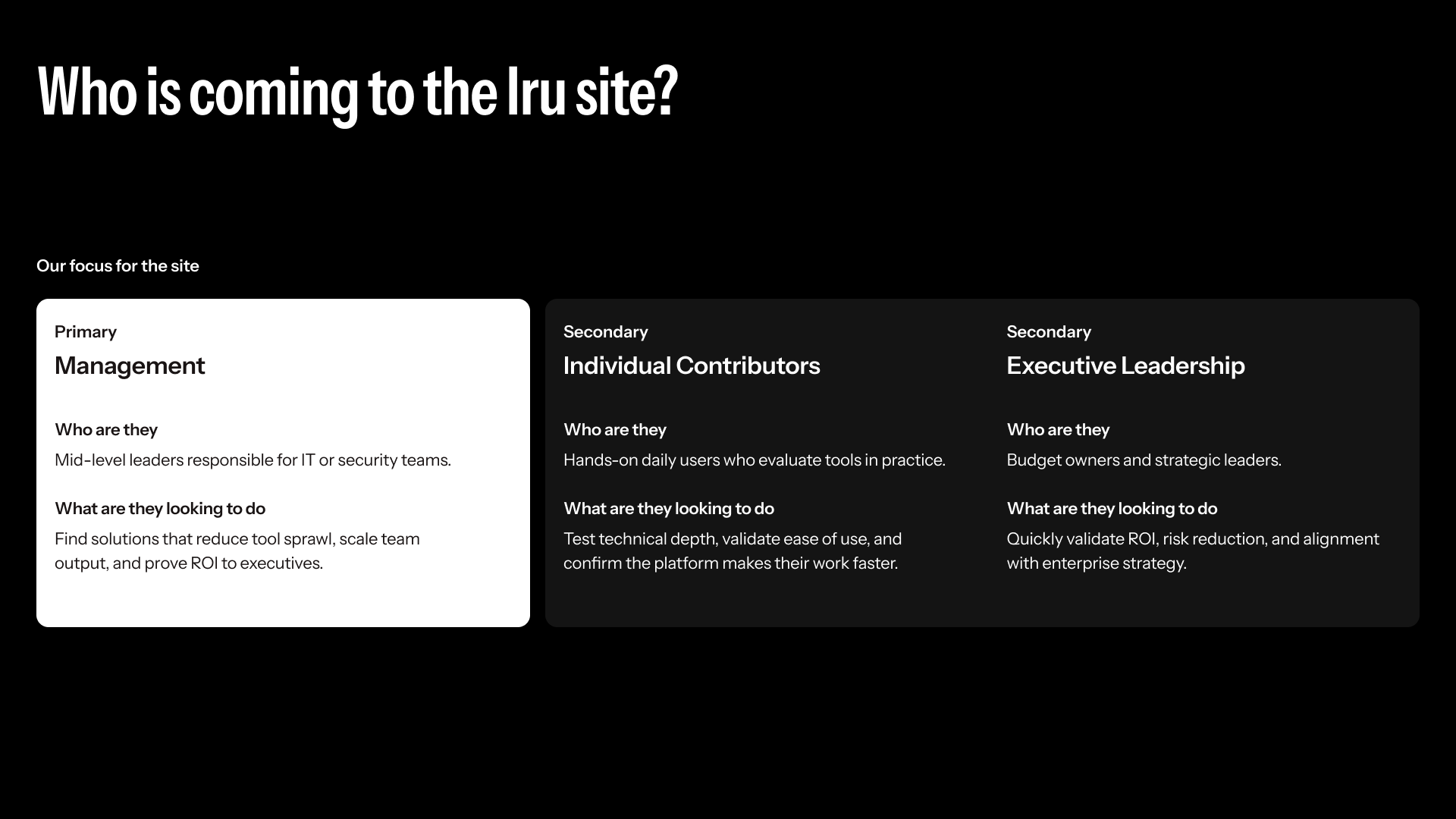
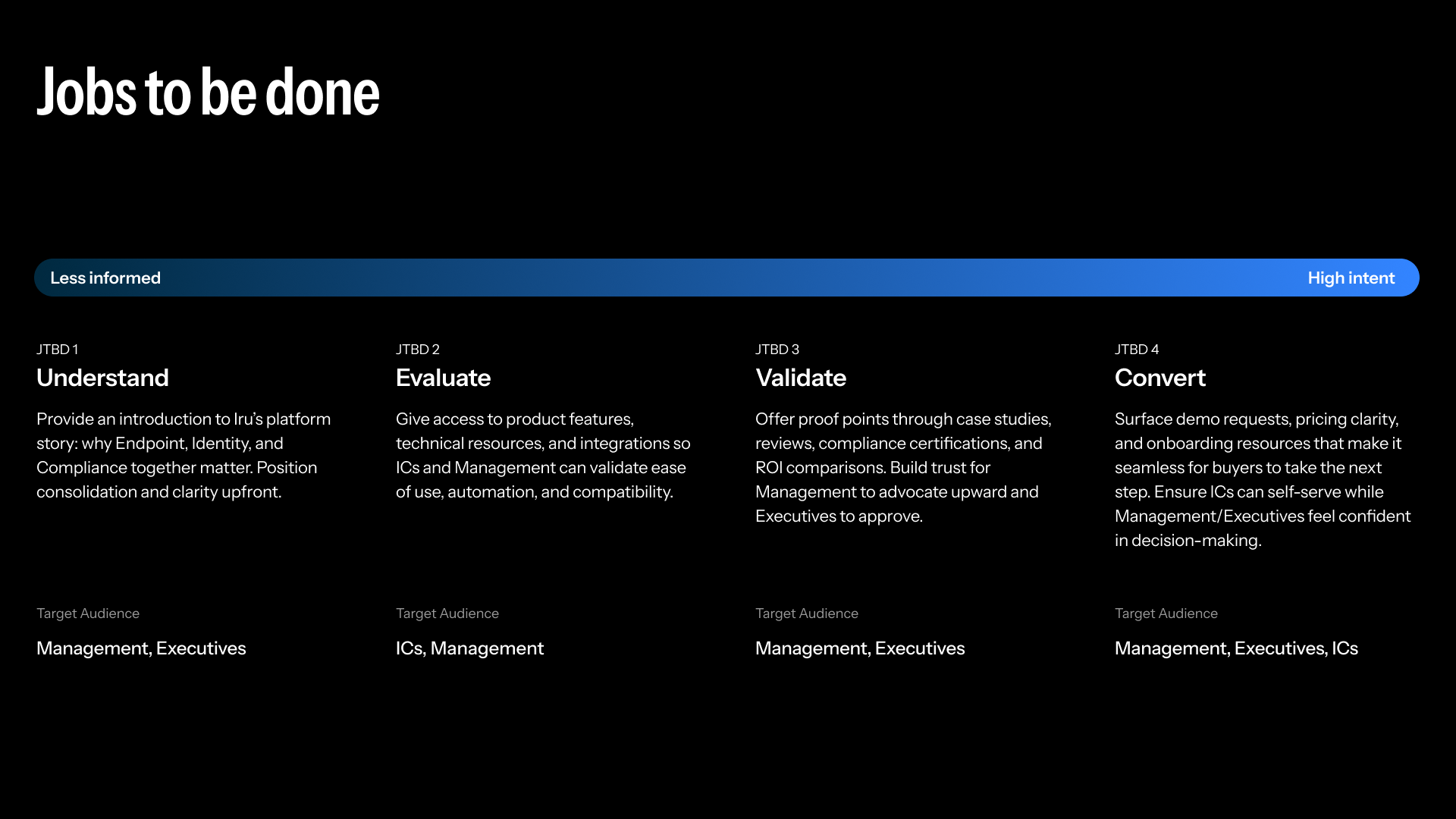
Audience Definition: Identifying core user groups and mapping their needs, motivations, and paths through the site.
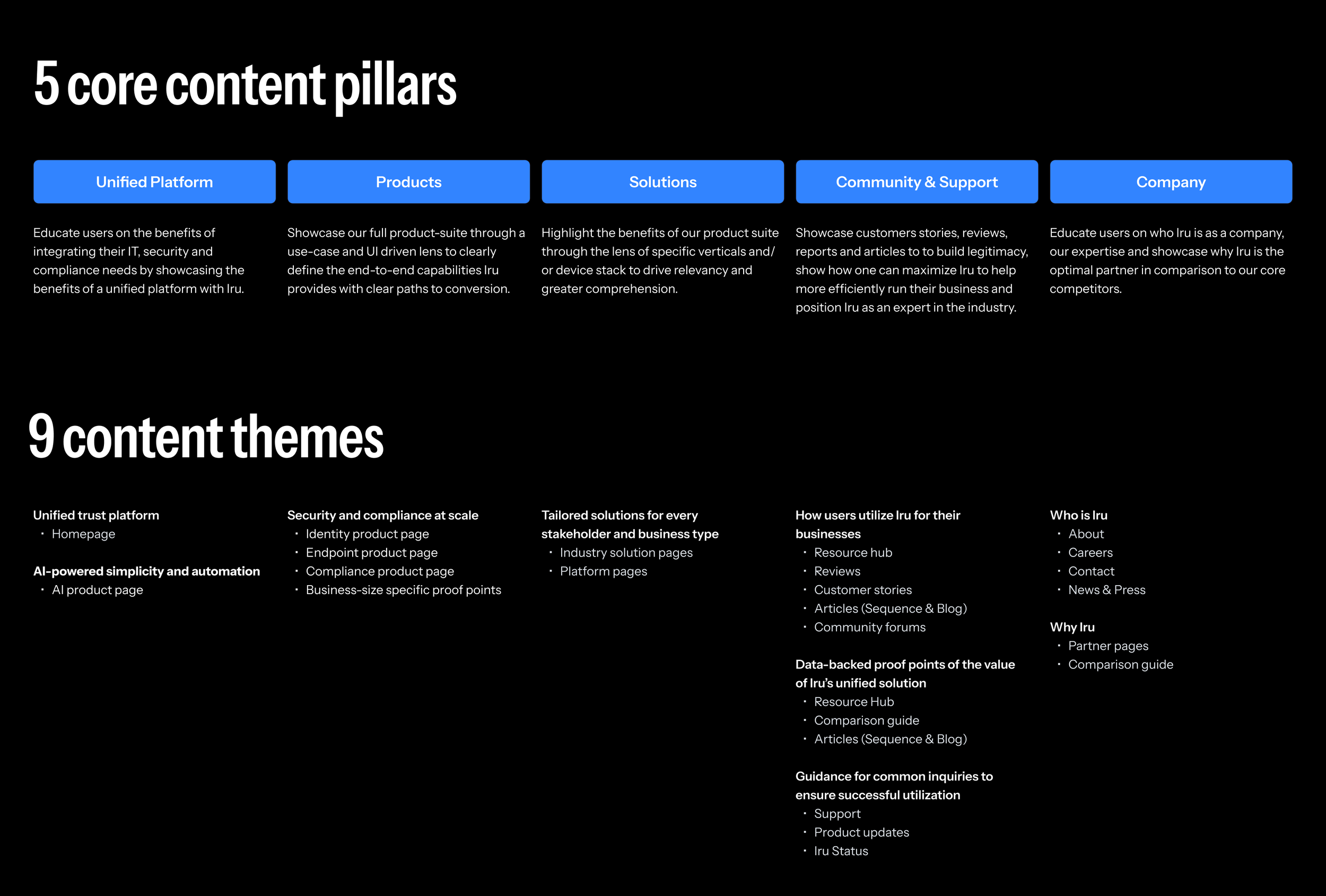
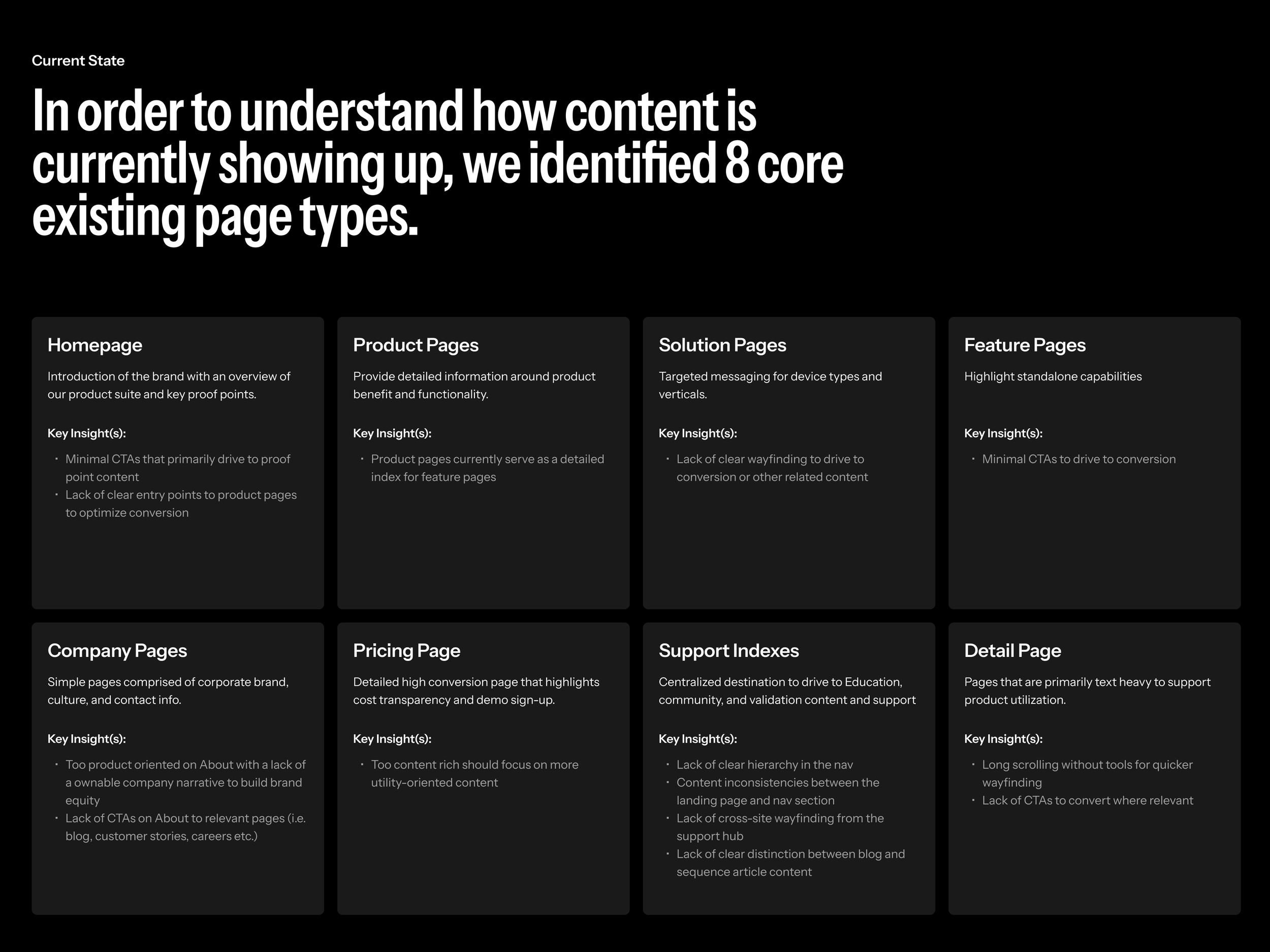
Content & Page Strategy: Establishing a scalable content strategy that clearly communicated Iru's evolving platform and product ecosystem across newly defined page types.
Site IA: Creating an intuitive information architecture that organized products, resources, and experiences for both current and prospective customers.
Experience Principles: Defining the guiding principles that informed navigation, page structure, and interactions across the site.
Site Priorities
Before defining the experience itself, I established the website's strategic priorities, what the site ultimately needed to achieve for both the business and its users.
Build trust
Show Iru as a secure platform through clear and informed messaging to build confidence and brand equity.
Simplify complexity
Make the product and its value easy to understand through product-led storytelling that dynamically adapts to our varying user needs.
Drive demand and conversion
Guide users from awareness to action by moving them through the pipelines with action-oriented CTAs and intent-driven wayfinding.
Express the brand
Embody Iru’s unified, AI-powered identity through connected site design and content strategy.
2. Audience
Definition
As Iru expanded beyond endpoint management, the website needed to support a broader buying committee. I identified key audiences and translated their needs into Jobs to Be Done that informed content strategy, page hierarchy, and user flows.
3. Content & Page
Strategy
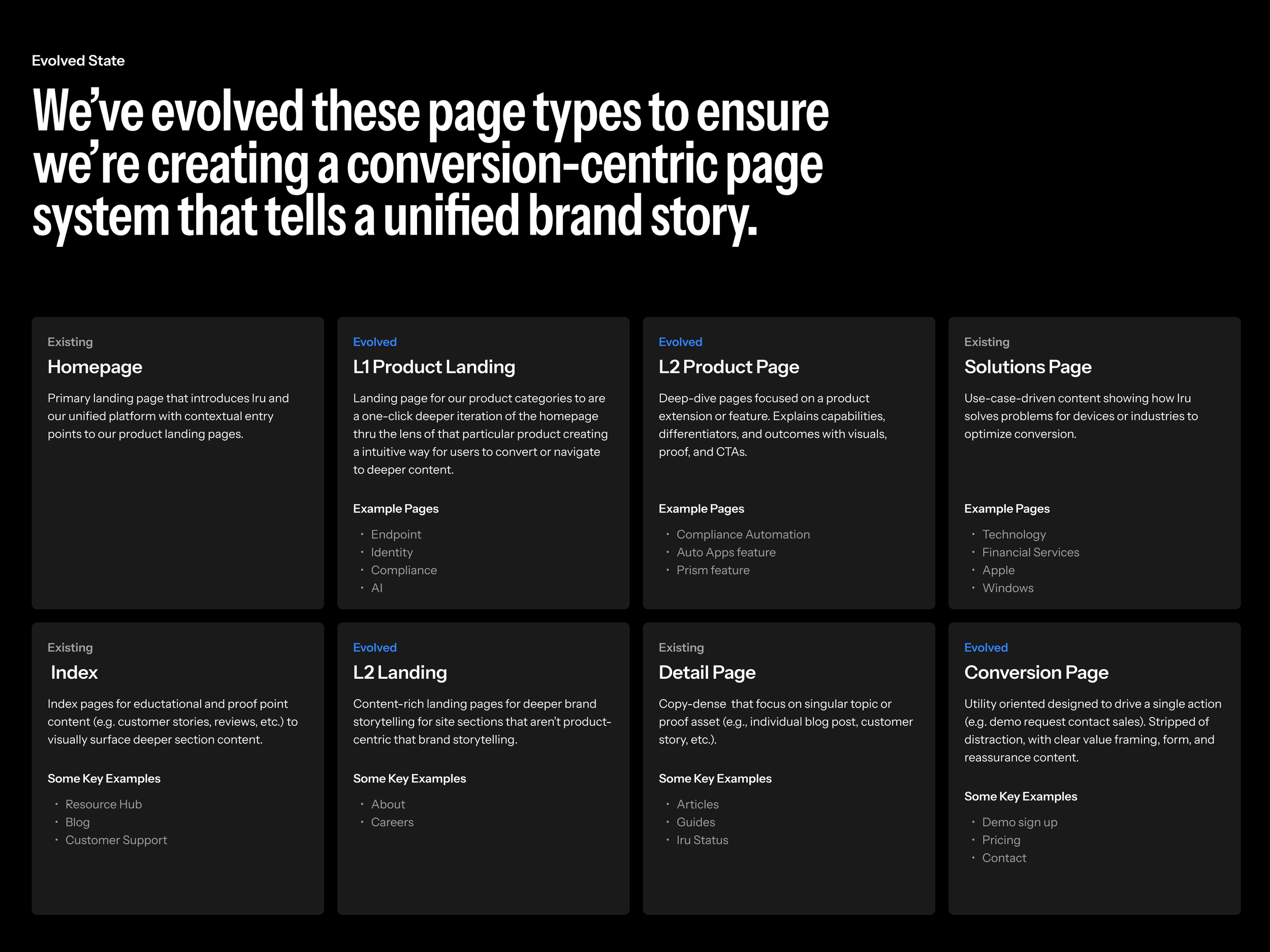
With the audiences and Jobs to Be Done established, I shifted focus to the content itself. Rather than thinking page-by-page, I developed a scalable content framework that organized information into clear themes, standardized page types, and created a consistent path from education to conversion.
4. Information Architecture
Core IA Updates
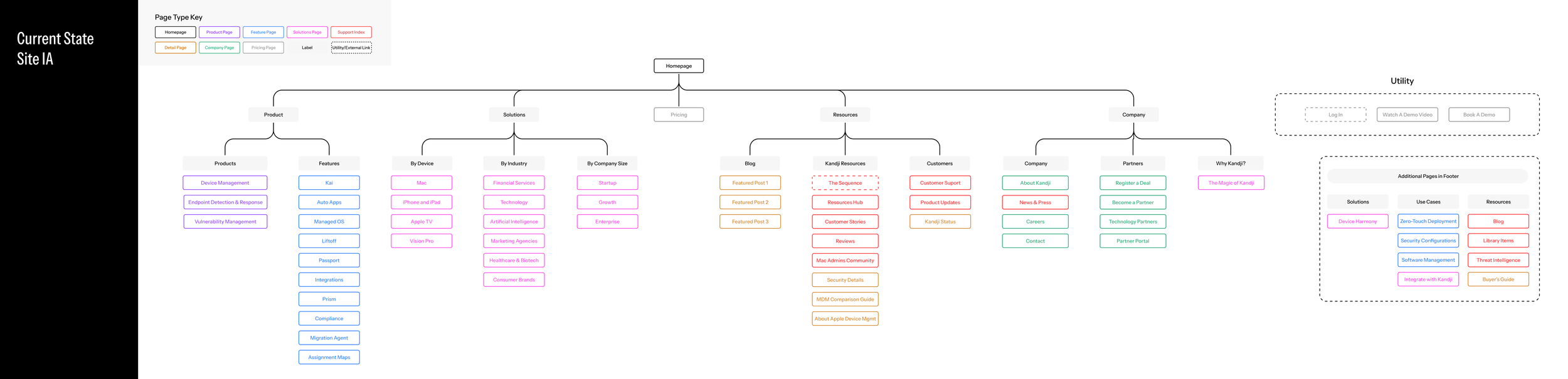
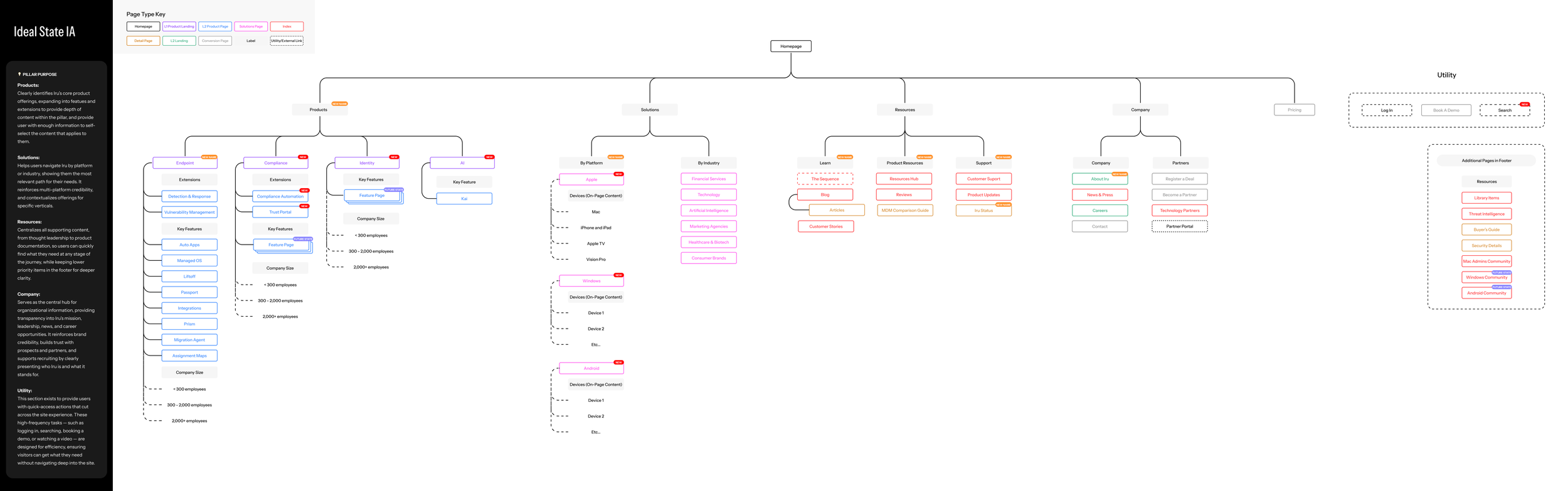
The information architecture was built by combining multiple streams of research. After auditing the existing site and evaluating industry patterns, I applied insights from audience strategy, content planning, and page architecture to create a navigation system that prioritized clarity, discoverability, and long-term scalability.
Current IA Diagram/Before State
Finalized Architecture
Clear Product Story
Defined distinct product pillars that created a clearer narrative for Iru's expanding platform, making it easier for users to understand each product while naturally discovering supporting capabilities.
Platform-Agnostic Structure
Restructured the IA to reflect Iru's evolution beyond Apple, organizing content around user needs and platform-agnostic solutions rather than legacy product assumptions.
Site-wide Search
Elevated search as a primary navigation tool and recommended semantic search capabilities to help users quickly surface relevant content across a growing product ecosystem.
Resource Categorization
Reorganized educational resources into clear, purpose-driven categories, improving discoverability and giving users greater confidence in where to find relevant information.
Information Consolidation
Reduced unnecessary page proliferation by consolidating related content into strategic landing pages, creating stronger user journeys while simplifying site maintenance.
5. Experience Principles
To bridge strategy and execution, I established a set of experience principles that translated Iru's brand into actionable guidance for the website. These principles aligned cross-functional teams around a shared vision for how the experience should feel and function.
These principles were informed by our discovery work and translated into three key areas of focus: Utility, Content, and Momentum, which guided the design of navigation, page structure, storytelling, and conversion throughout the site.
Be direct
Simplify complexity and communicate value with clarity.
Be reliable
Build confidence through transparency, proof, and guidance.
Be unified
Present the platform as one connected ecosystem.
Be user-centric
Design around real user goals and decision-making journeys.
Be product-forward
Let the product experience tell the story.
Bringing the Strategy to Life
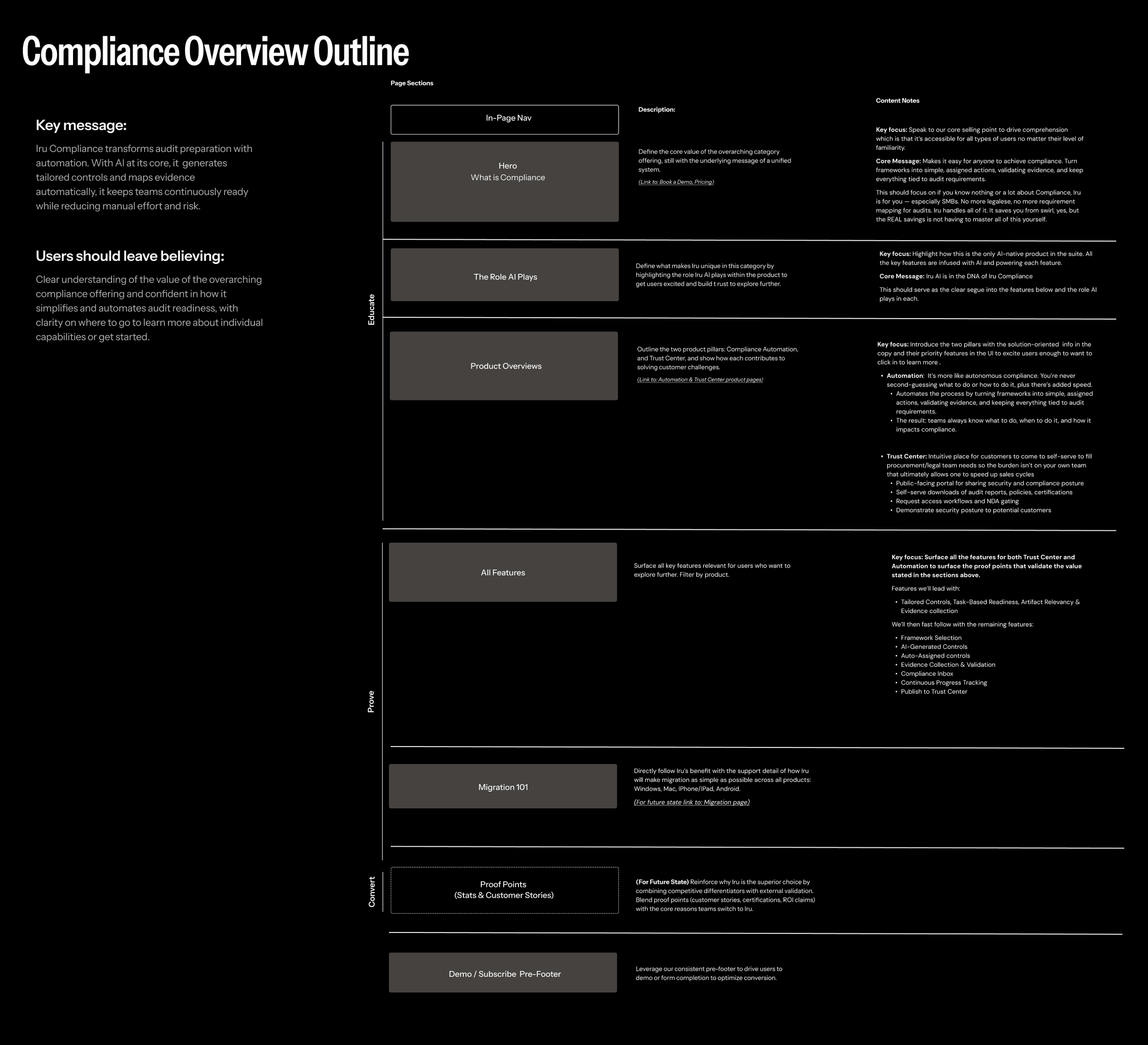
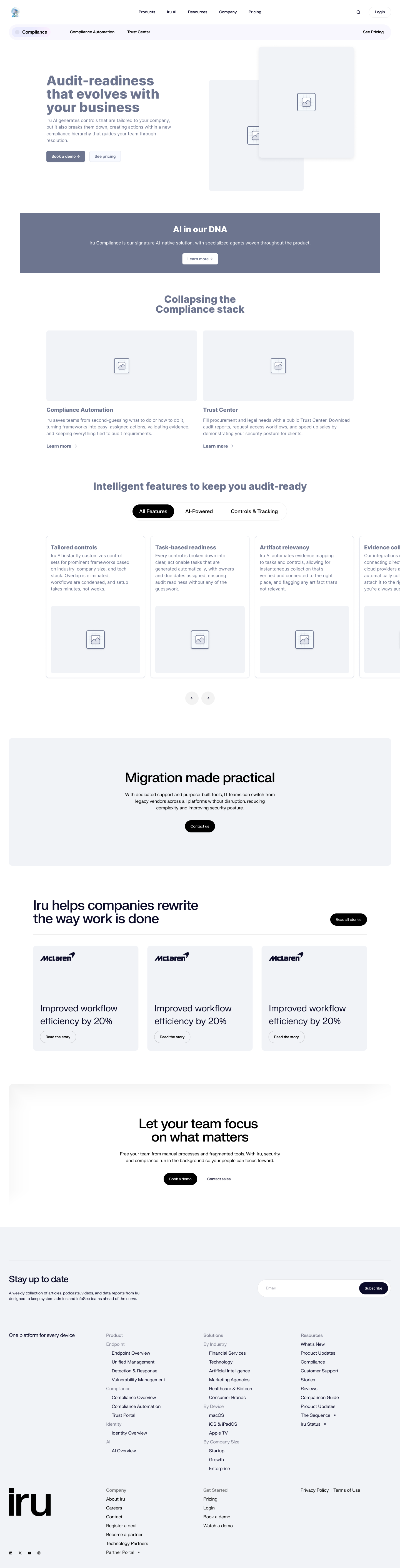
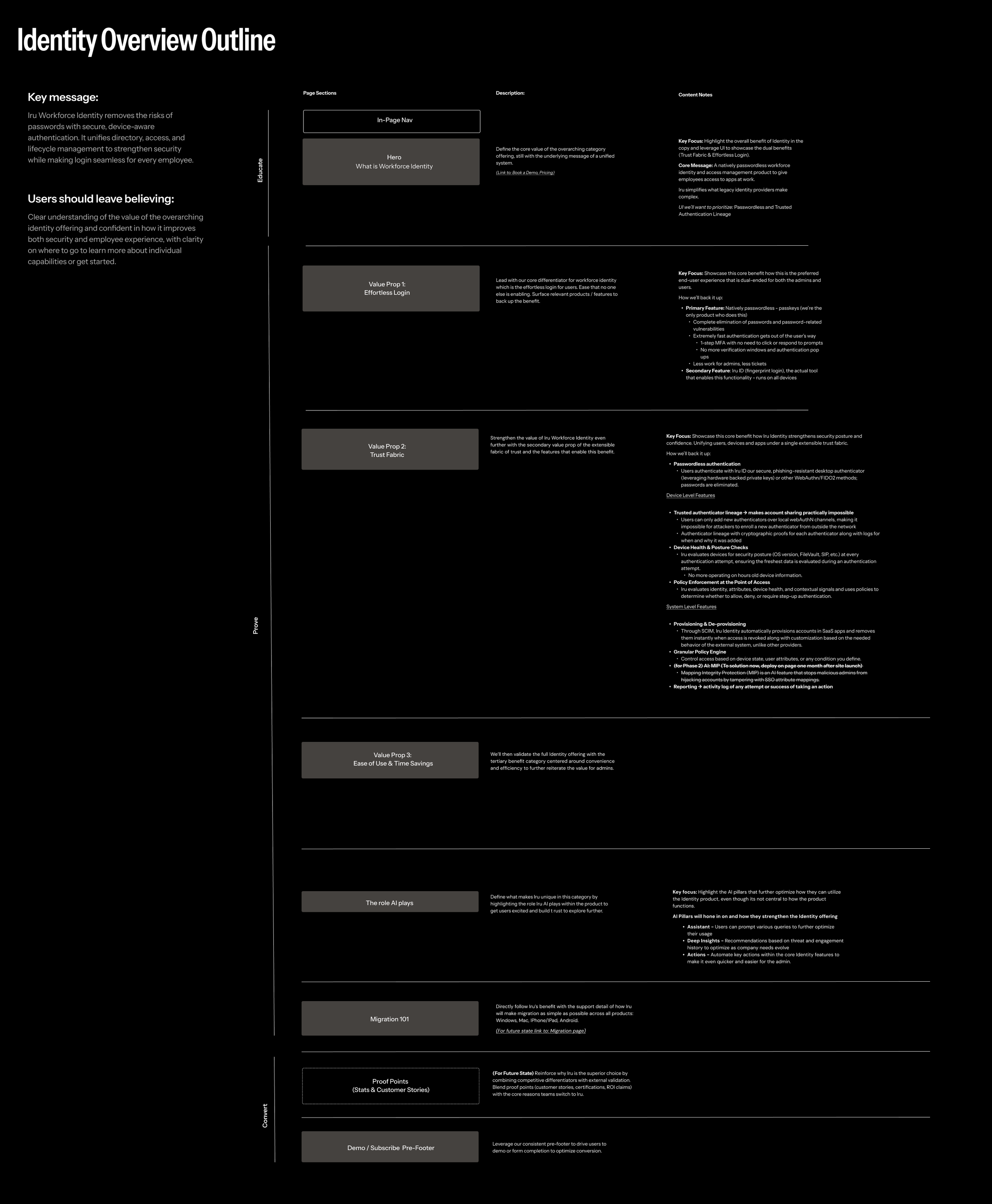
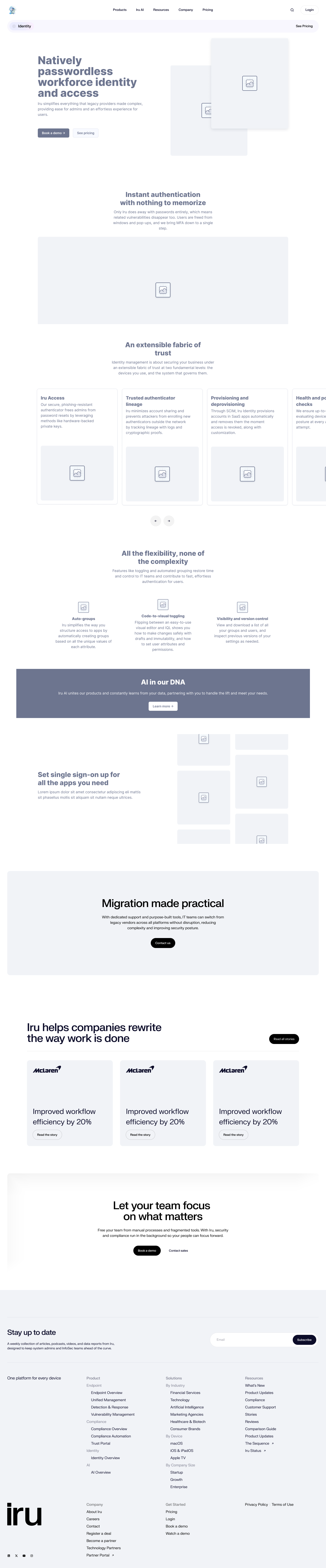
With the strategic direction established, I translated the framework into a series of page briefs and low-fidelity wireframes. In total, we created 21 pages for the website.
Every page wire was paired with a page brief, noting page narrative, key messages, section focus, and CTAs so clients could provide structural feedback before seeing the wireframe itself. This helped them further separate content from design, and get us to the level of accuracy we needed.
Final Deliverable
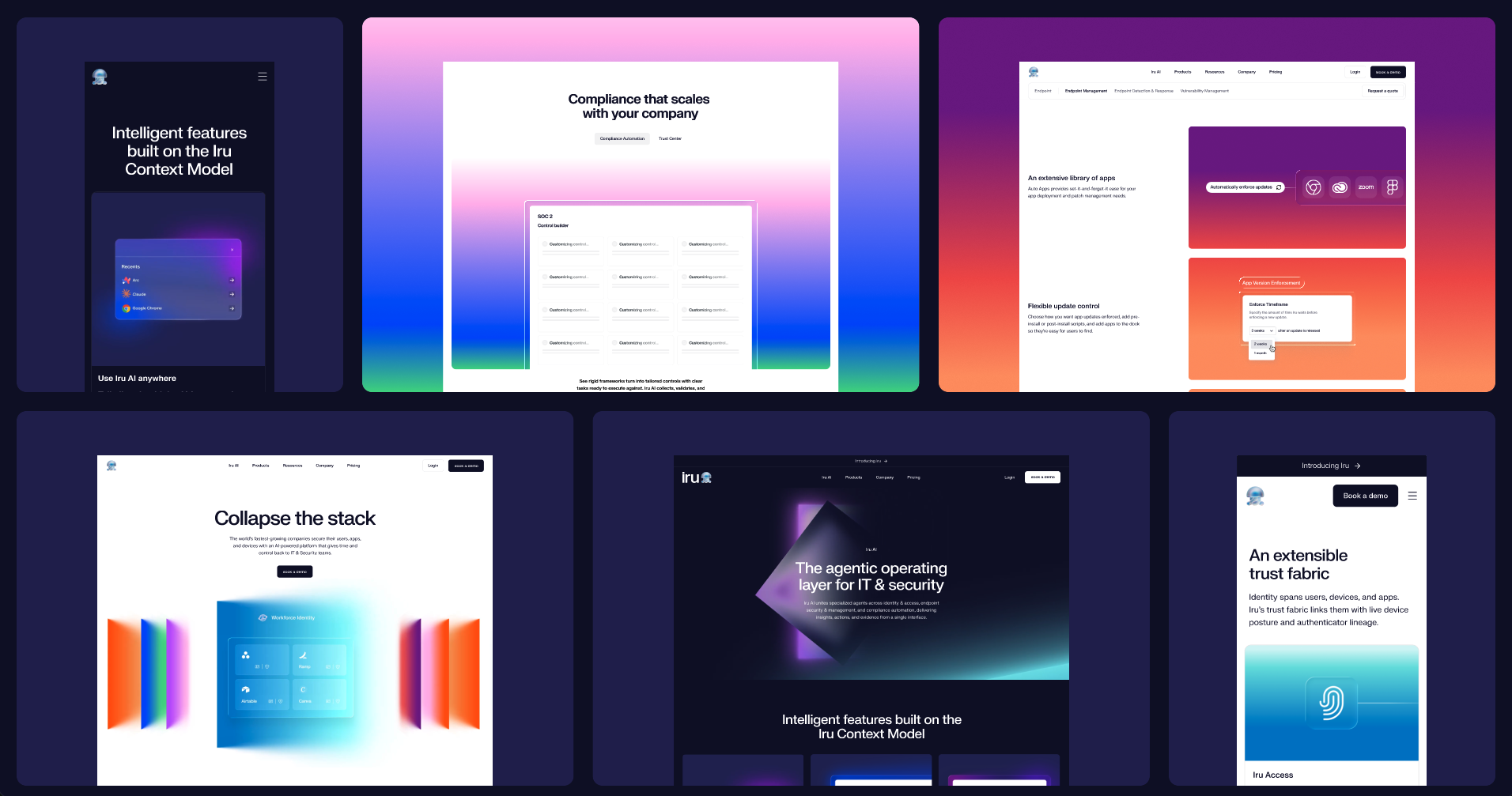
In just 10 short weeks, our team had a fully functioning website representing a completely transformed brand, ready to scale during this next phase of Iru’s growth.
From Adam, Iru CEO